Stop managing stress. Start training for it.
The 8-week system that rebuilds a busy dad's capacity to handle pressure — built on the same training the Navy uses on SEALs. About 30 minutes a day, starting with the one habit that's quietly dragging the rest down.
Here's the thing almost nobody tells you about stress: stress isn't your problem. Your capacity to handle it is.
Think of that capacity like a container. When it's shallow, a single 4:47 PM email can wreck your whole evening. When it's deep, the same email barely registers. Five daily practices build that container — and here's the part that changes everything: when life gets loud, they don't all collapse at once. One slips first. And it topples the rest.
That one is your First Domino. Guard it, and you catch the spiral before it starts. Miss it, and a year of progress can unravel in a month.
If you took the Stress Capacity Scorecard, you already found yours. This page is what you do with it. And if you didn't — no problem. By the time you finish reading, you'll see through your own pattern better than most "stress experts" could explain in a weekend seminar.
I've spent 25 years helping people get their health back. For most of those years, I watched the same thing happen to good men — guys who used to be athletes, who used to thrive under pressure, who somewhere between the second kid and the corner office turned into someone who gets winded wrestling on the living room floor and stands in the kitchen at 10:47 PM stress-eating peanut butter straight from the jar.
It doesn't have to be the rest of your story. Let me show you the way out.
He got winded wrestling his own kids. Then it got worse.
Mark came to me three years ago. Sales director. 42. Three kids. Played college basketball — best shape of his life at 25.
"I was wrestling with my kids on the living room floor. Within 90 seconds I was completely winded. My 8-year-old looked at me and said, 'Dad, are you okay?'"
He laughed it off. But that night — after the kids were down, after his wife was asleep — he stood in the kitchen at 10:47 PM stress-eating peanut butter out of the jar. And he had the thought that scares the hell out of me every time I hear it: This is just what being a working dad means.
Mark used to love the fourth quarter. Now a single 4:47 PM email from a client could wreck his entire evening. I'd seen this exact pattern hundreds of times. And here's what nobody had ever told Mark:
The problem wasn't that Mark was weak. It's that he'd never been given a system.
He'd been handed tools. A meditation app he used for a week. Breathing exercises he forgot. A gym membership that worked until work got crazy. Scattered tools, no system holding them together. So the moment life got chaotic — and life always gets chaotic — the tools fell apart and Mark fell with them.
Three years later, Mark isn't my client anymore. He graduated. Last month he told me his wife says he's "a different person." Not because he changed who he is — because he finally has a system for handling what life throws at him.
Client names and identifying details have been changed for privacy. Individual results vary and are not guaranteed.
You were sold a drawer full of tools and told it was a system.
You've tried. Probably more than once. And every time, it worked for a few weeks and then quietly died. That's not a willpower problem — it's what happens when you fight a system-level problem with tool-level solutions.
A meditation app is a tool. A breathing exercise is a tool. A gym membership is a tool. Tools are fine — when they're plugged into a complete system. On their own, the first chaotic week takes them out. And every time it collapsed, you blamed yourself.
Here's the reframe that changes everything: you don't need to relax. You need to train.
What actually builds a dad who can handle it comes down to a few things almost nobody puts together in the right order. Here they are.
Five things that turn a stressed-out dad into a steady one.
You never actually finish the stress
A zebra gets chased by a lion, escapes, then physically shakes it off — telling its nervous system the threat is over. No ulcers. You get the lion all day (the 4:47 email, the bedtime meltdown, the surprise bill) but never complete the cycle. So it stays trapped, stacking up, until you can't sleep and can't figure out why.
The zebra shakes it off. You need to walk it off.
The stress isn't killing you — your story about it is
When you believe your pounding heart is preparing you for a challenge, your body responds differently: blood vessels stay relaxed, you recover faster, you perform better. If you ever competed, you already know this. Game on the line, fourth quarter — you didn't crumble. You rose. That guy is still in there.
You can actually make that container deeper
Five daily practices deepen the container. None are complicated — the magic is they fold into your day, not on top of it.
Steps
Movement, not exercise. Completes stress cycles, zero willpower.
Sleep
Where your brain digests stress. Skimp = ~30% less tolerance.
Meditation
Thickens the rational brain, shrinks the fear center.
Strength
A controlled stressor that teaches your body to recover.
Protein + veg
Stable blood sugar, stable mood, steady chemistry.
One domino takes down all the others
When stress cracks you, one practice slips first — and knocks over the rest. For Mark it was meditation: a four-day cold knocked out his morning practice, and within three weeks he was right back to stress-eating and snapping at everyone. One month to undo a year of progress. For Dave, a 60-hour-a-week attorney, it's sleep.
You don't fix all five. You find the one dragging the rest down — and you guard it.
That's the shortcut. Most dads attack all five at once and burn out by week two. Find your domino (about five minutes with the Scorecard), reinforce it, and the eight weeks become how we make it permanent — then rebuild the rest on top, one practice at a time.
A slip doesn't have to become a spiral
You're going to fall off track — because you're human. The only thing that separates the dads who win is recovery speed. They've shrunk the gap between lapse and restart from three weeks to about 48 hours with one tool: the Post-Lapse Walk. As Mark put it: "It's like having a fire extinguisher. The fire still happens — but it doesn't burn down the whole house anymore."
Built to Handle It
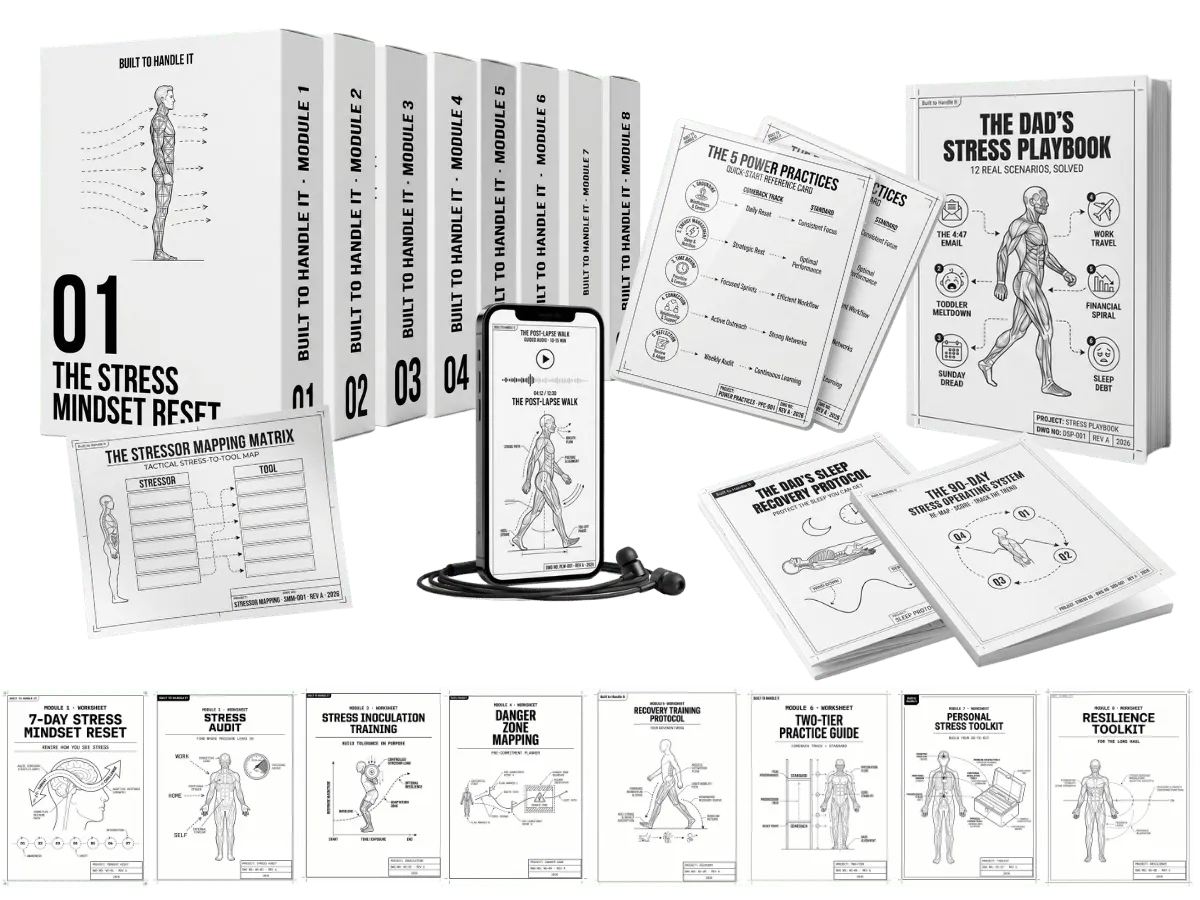
Built on Stress Inoculation Training — the same method used to train Navy SEALs, first responders, and elite performers — adapted for the dad who doesn't have three hours and doesn't want to become a monk. 8 weeks. 8 modules.
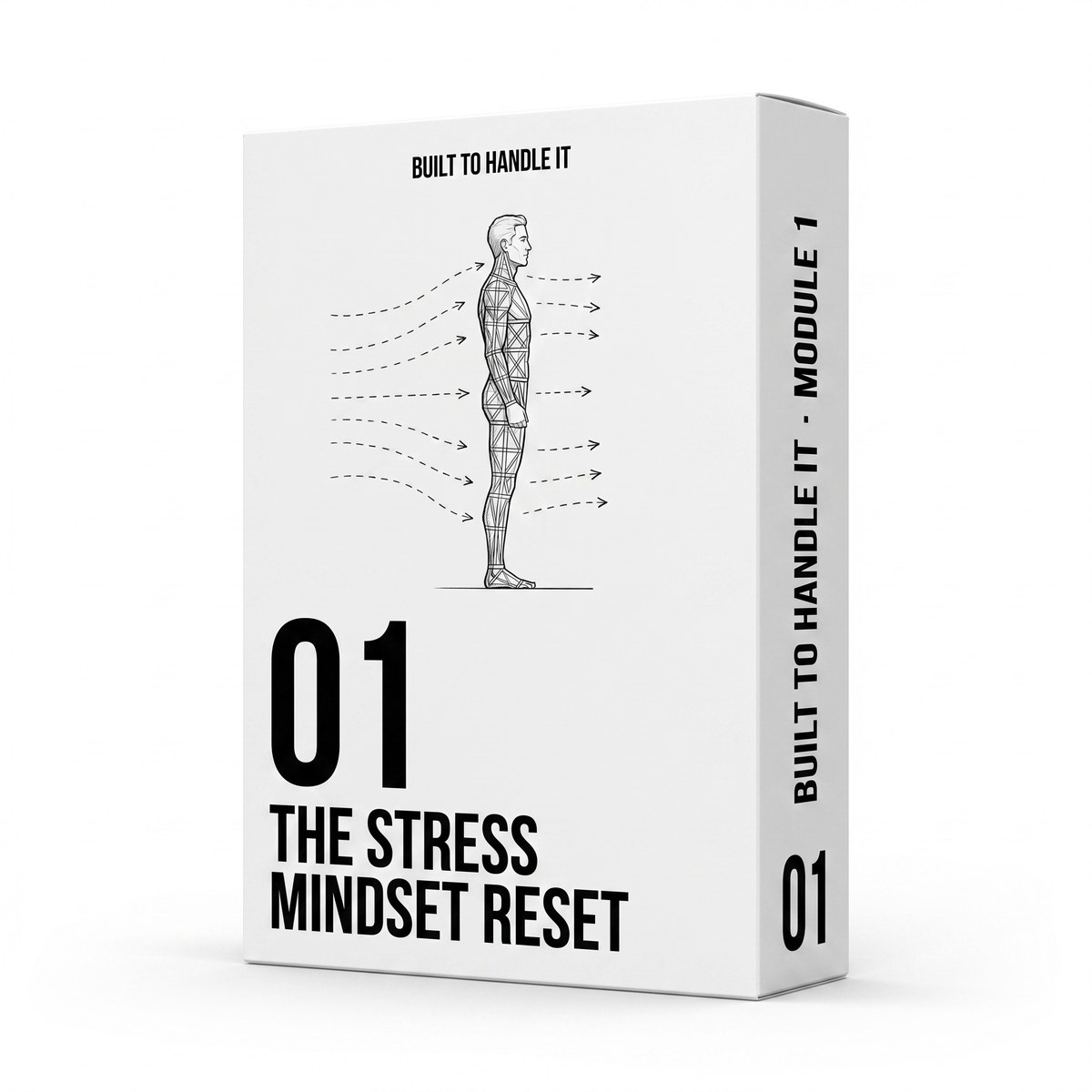
The Stress Mindset Reset
Good vs. bad stress — and why your beliefs about it change its grip on you.
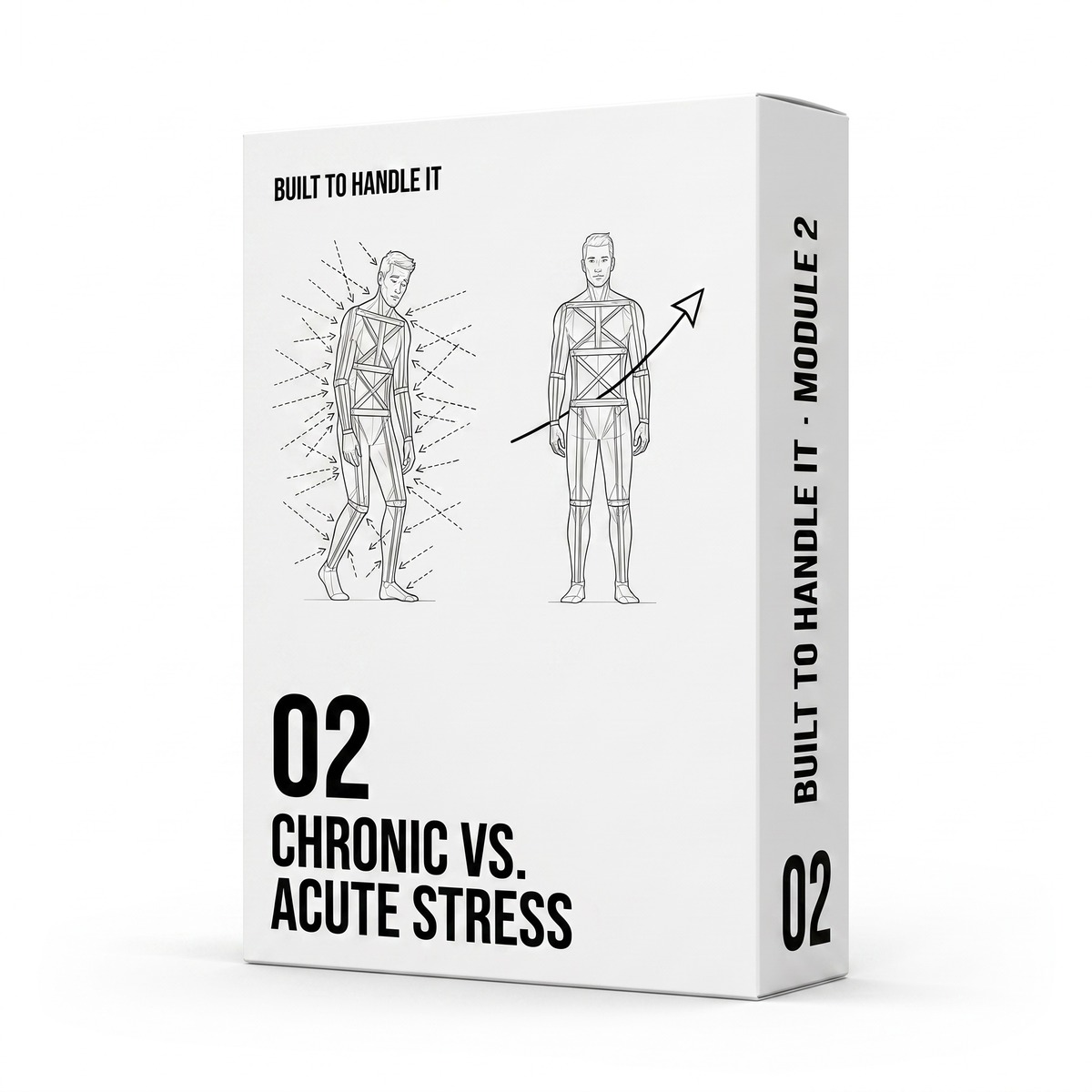
Chronic vs. Acute Stress
Why your body can't tell a lion from a deadline — and how to fix the kind that's wrecking you.
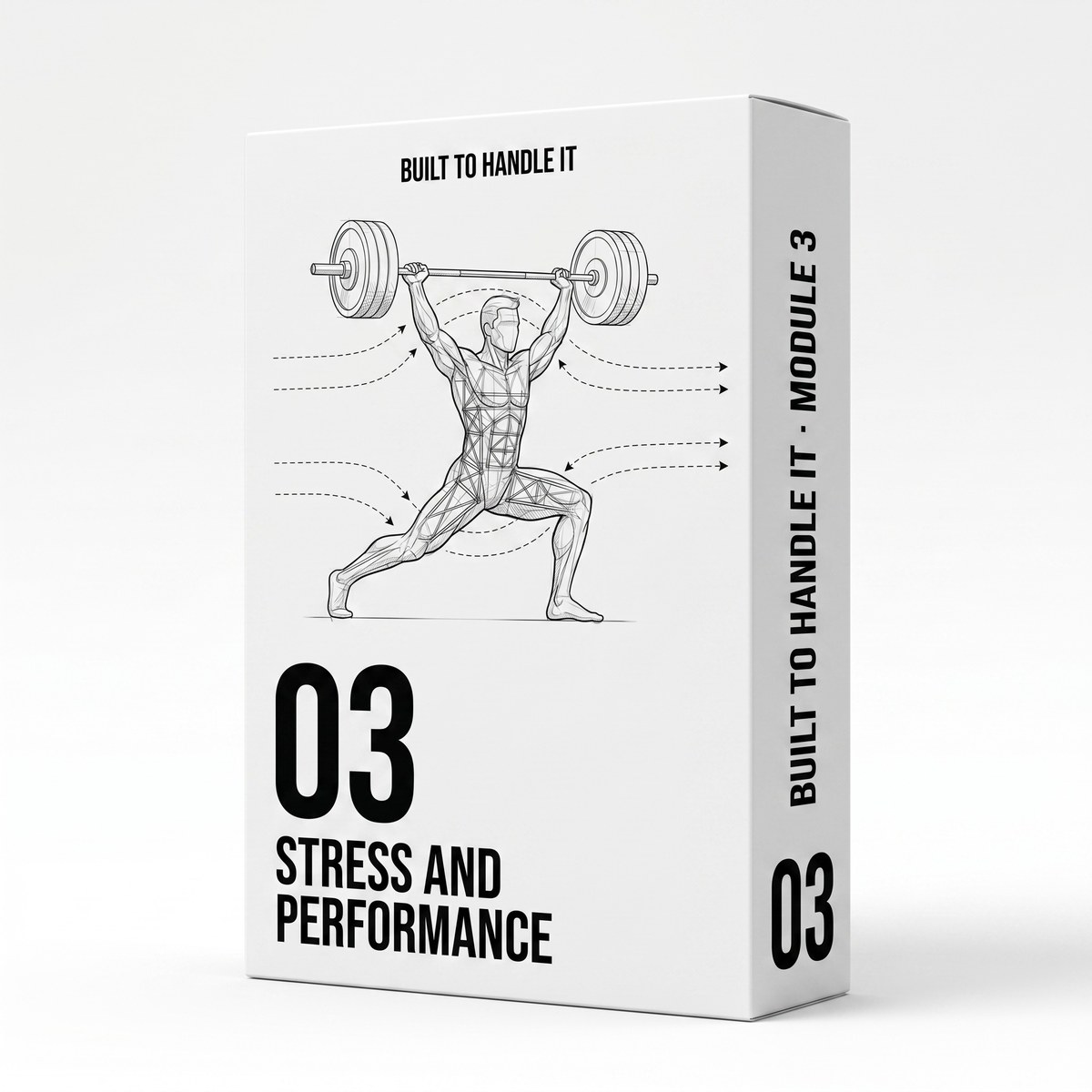
Stress and Performance
Train your nervous system like you train your body: stress, recover, get stronger.
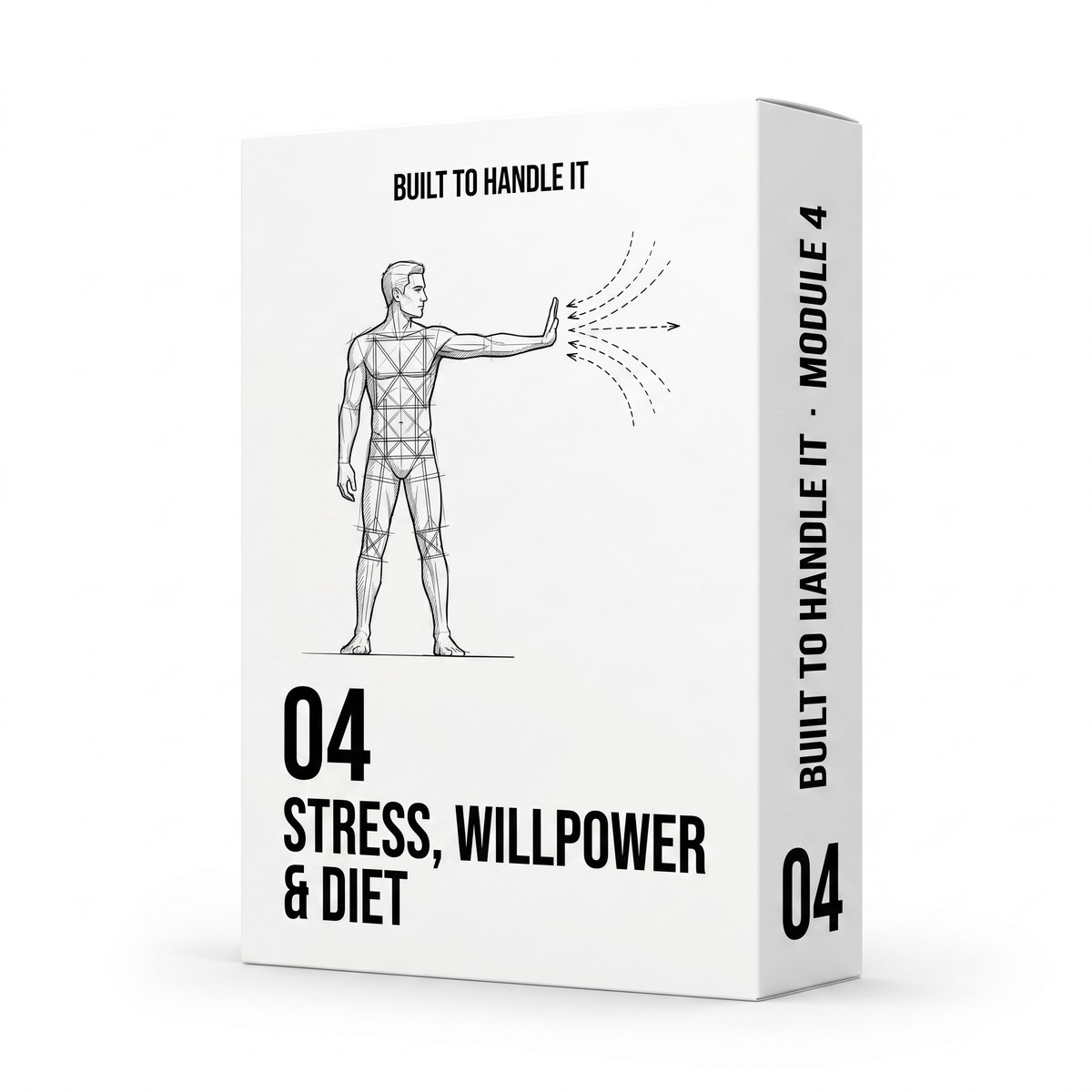
Stress, Willpower & Diet
Why stress makes you reach for the chips — and how to take back control.
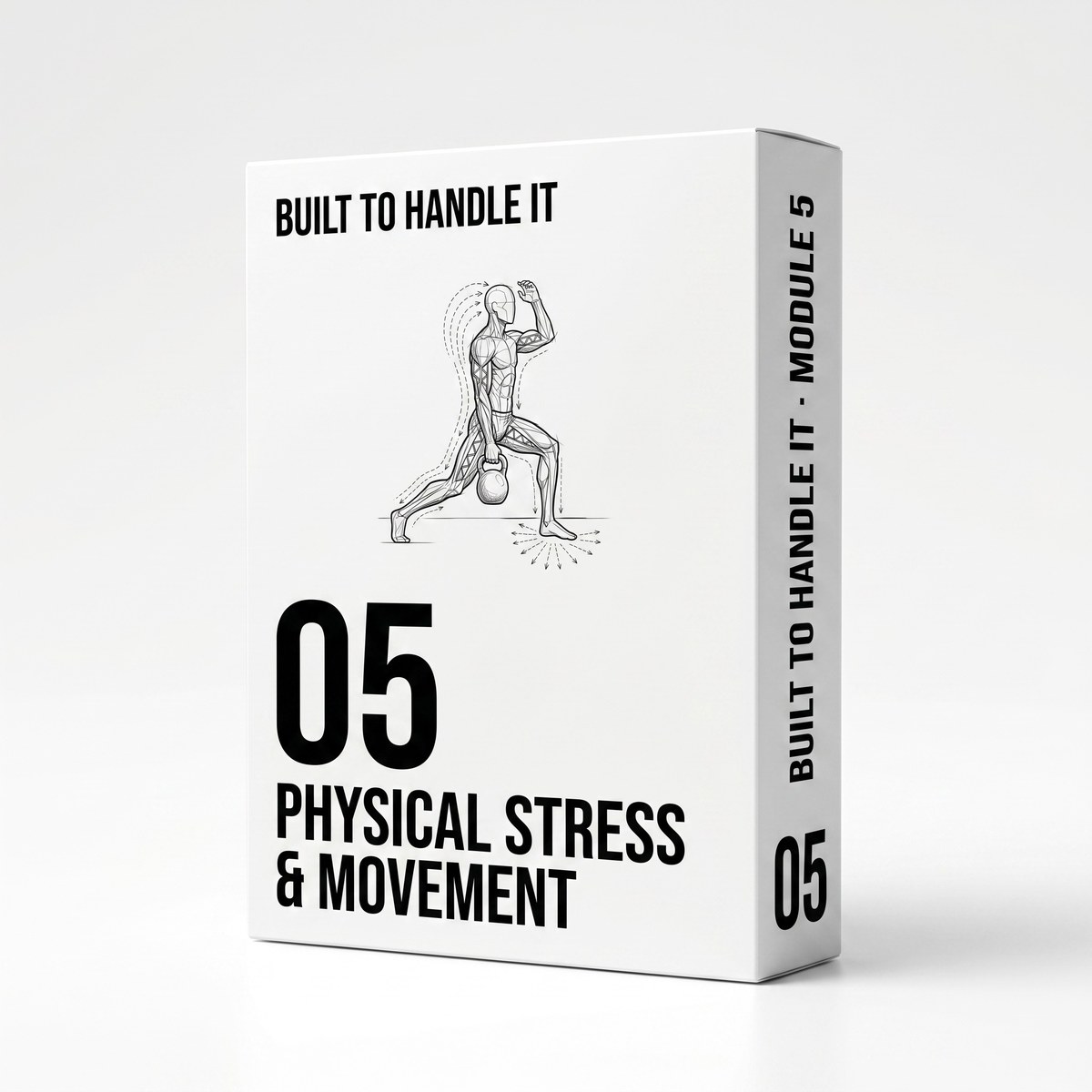
Physical Stress & Movement
Use strategic movement to complete the stress cycle instead of carrying it home.
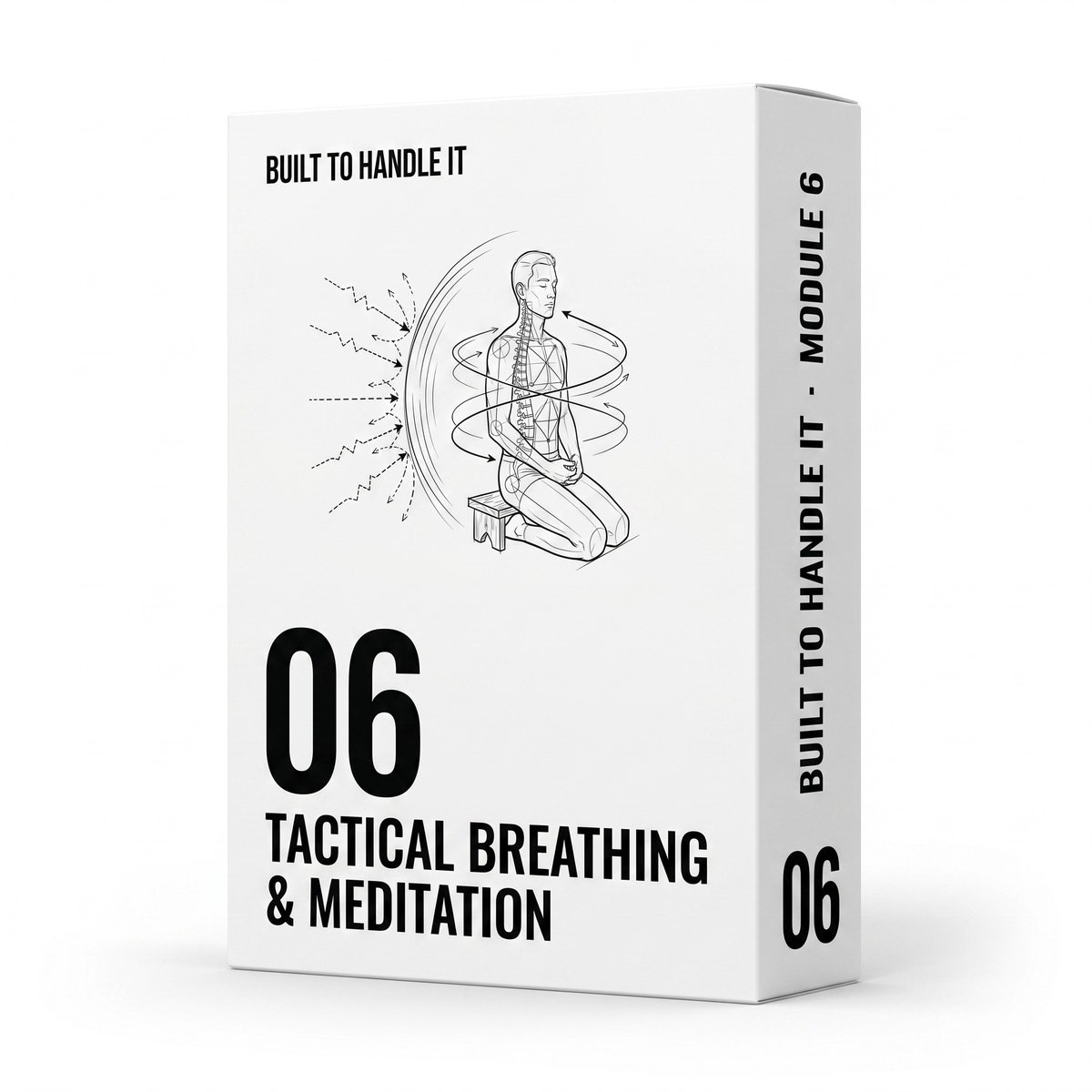
Tactical Breathing & Meditation
A daily practice plus emergency tools that work in your chair, your car, in two minutes.
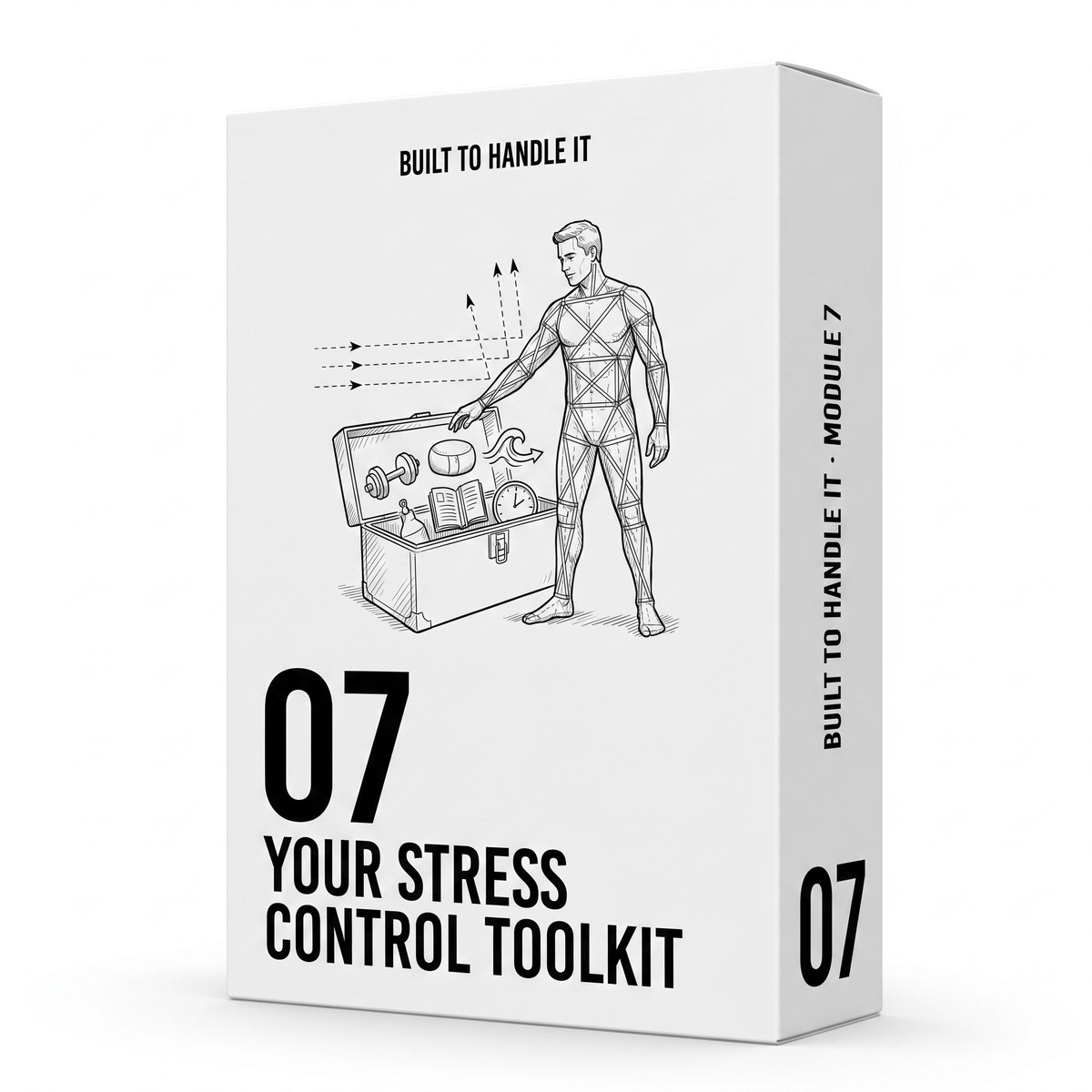
Your Stress Control Toolkit
Pull it all together into one personalized stress-management system that's actually yours.
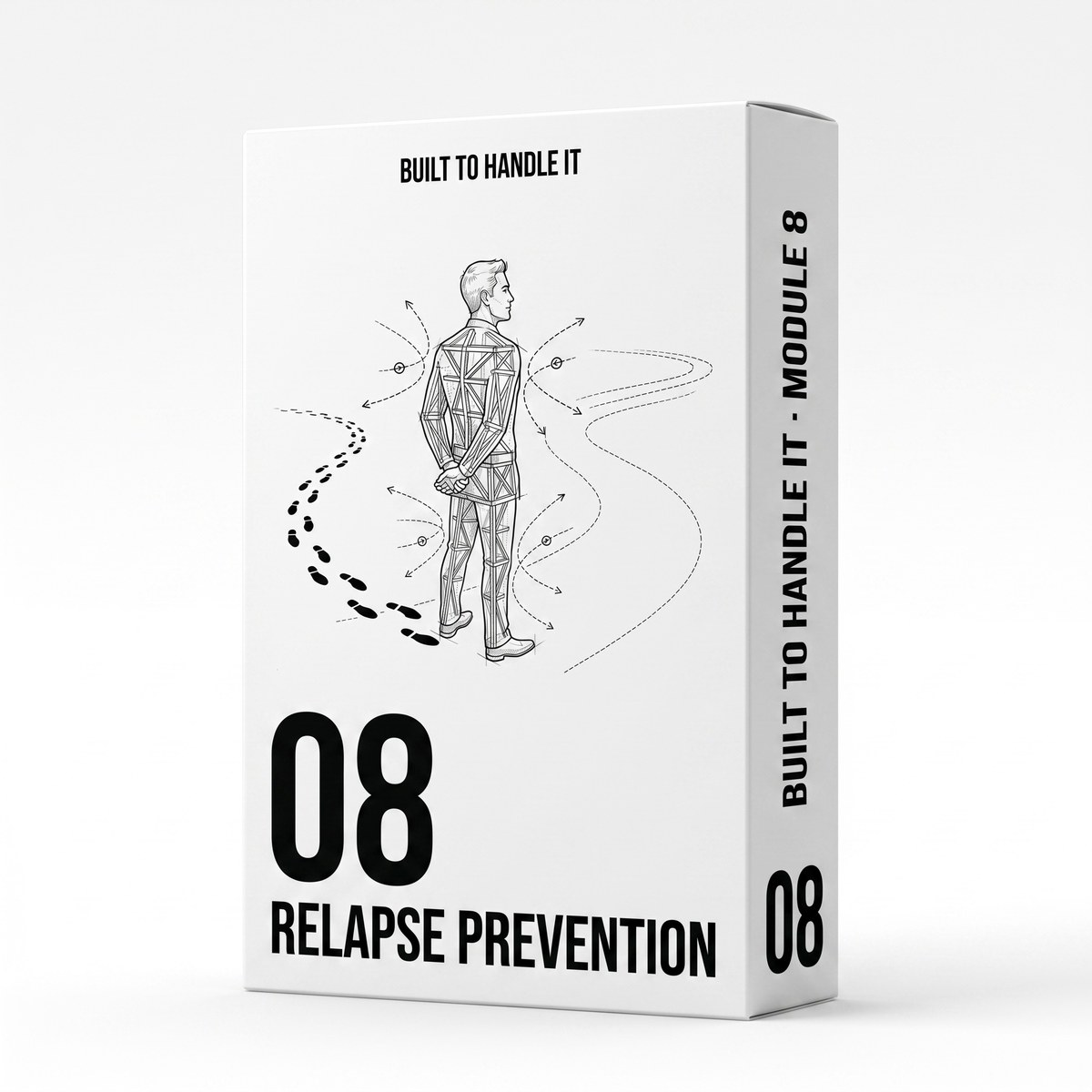
Relapse Prevention
Review, integrate, and keep your gains when life gets hard again — because it will.
- The 90-Second Reset — instant-calm tool you can run at your desk the moment the 4:47 PM email hits, before it hijacks your evening.
- Why the belief that "stress is bad for me" may be doing more damage than the stress itself — and the exact reframe that flips your physiology from clenched to capable.
- The First Domino diagnostic — answer one question about the last time you fell off track and you'll know the single practice to guard like your life depends on it.
- Surfing the Urge — how to ride out a late-night craving without white-knuckling it, so the sleeve of Oreos stays in the pantry.
- Why stress makes you reach for chips — it's not a character flaw, it's biology — and the 30g protein threshold that steadies the crash (this is my actual wheelhouse as a nutrition PhD).
- How to get your meditation benefit without sitting cross-legged hating every second — think of it as strength training for your brain — the alternatives for guys who've bounced off it before.
- The Post-Lapse Walk — 20 minutes that turn "I blew it, I'll start Monday" into "I'm already back on track by tomorrow morning."
- The "movement, not exercise" trick that gets you 10,000 steps without a single trip to the gym — Dave used it to cut his stress-eating by 80% in three weeks (results vary).
Start winning in eight minutes, not week eight.
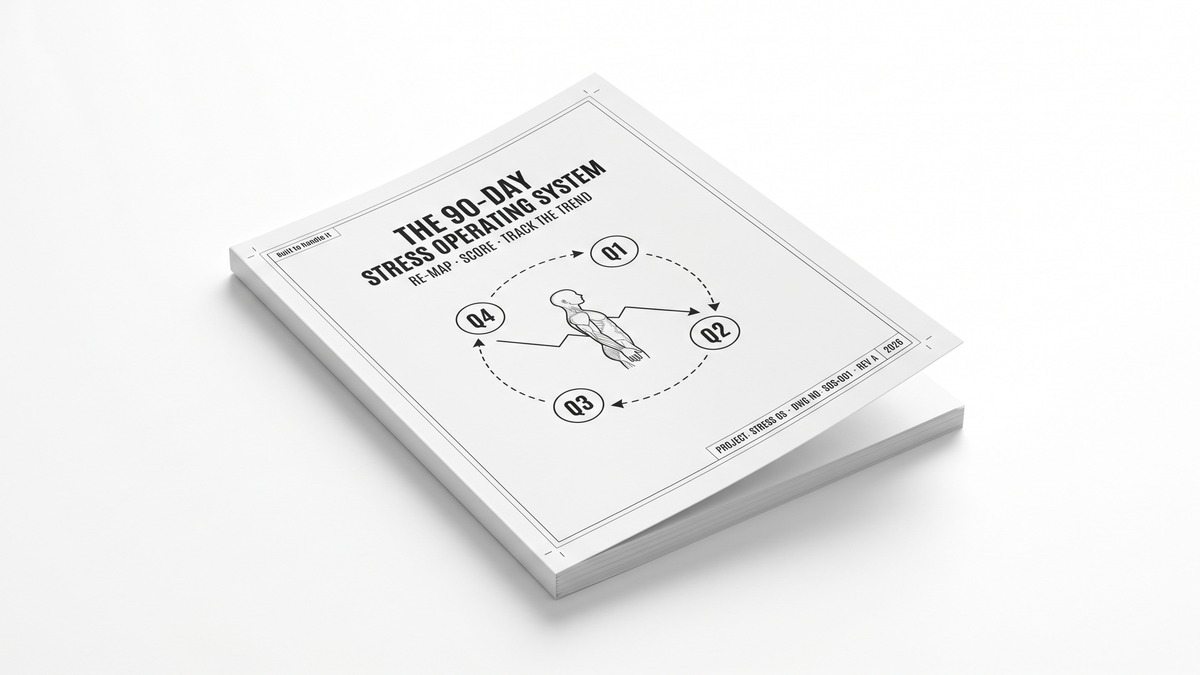
The 90-Day Stress Operating System
Don't just map your stress once — run the system all year. Re-map every quarter and watch the trend bend in your favor.
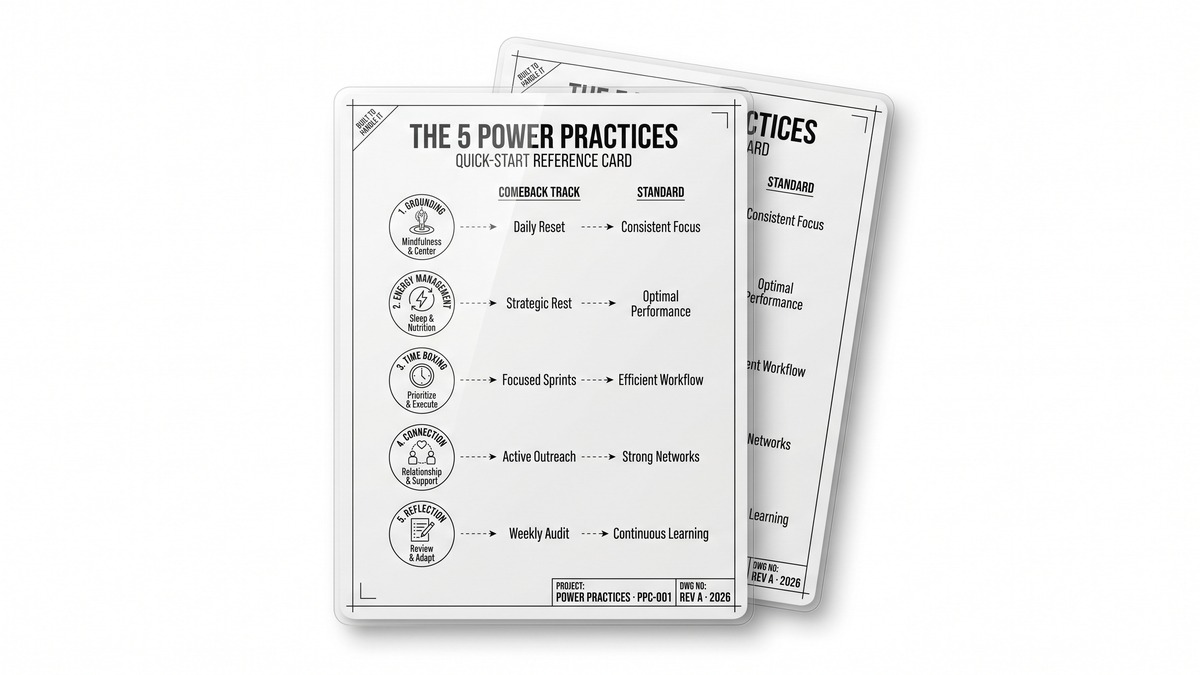
5 Power Practices Quick-Start Card
One page, fridge-ready. Every target for all five practices at a glance.
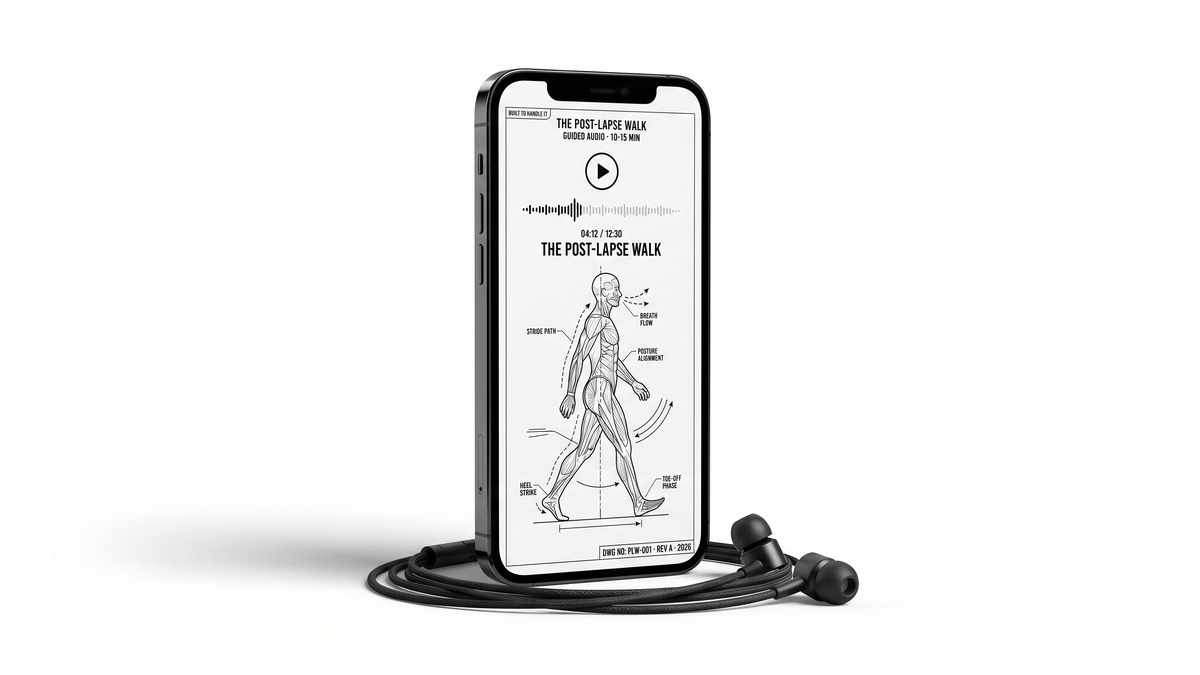
Post-Lapse Walk Audio Guide
Press play in the moment you've slipped — guided, right from your phone.
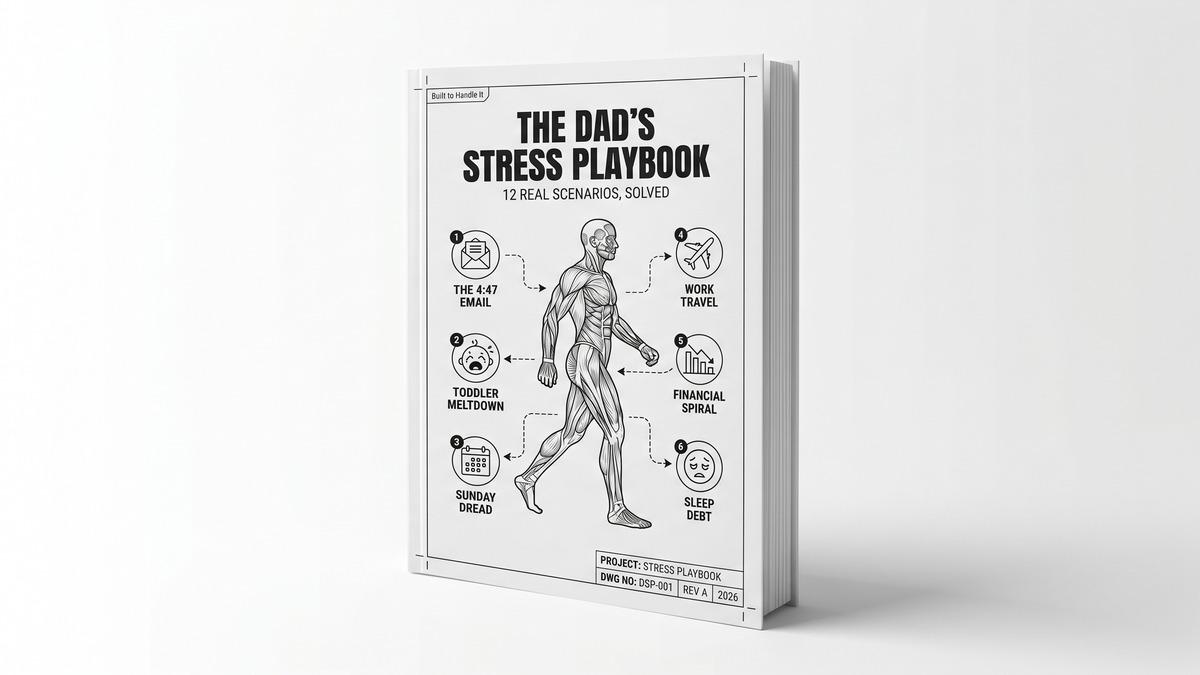
The Dad's Stress Playbook
12 real scenarios — the 4:47 email, the bedtime meltdown, Sunday-night dread — each with the exact tool to deploy.
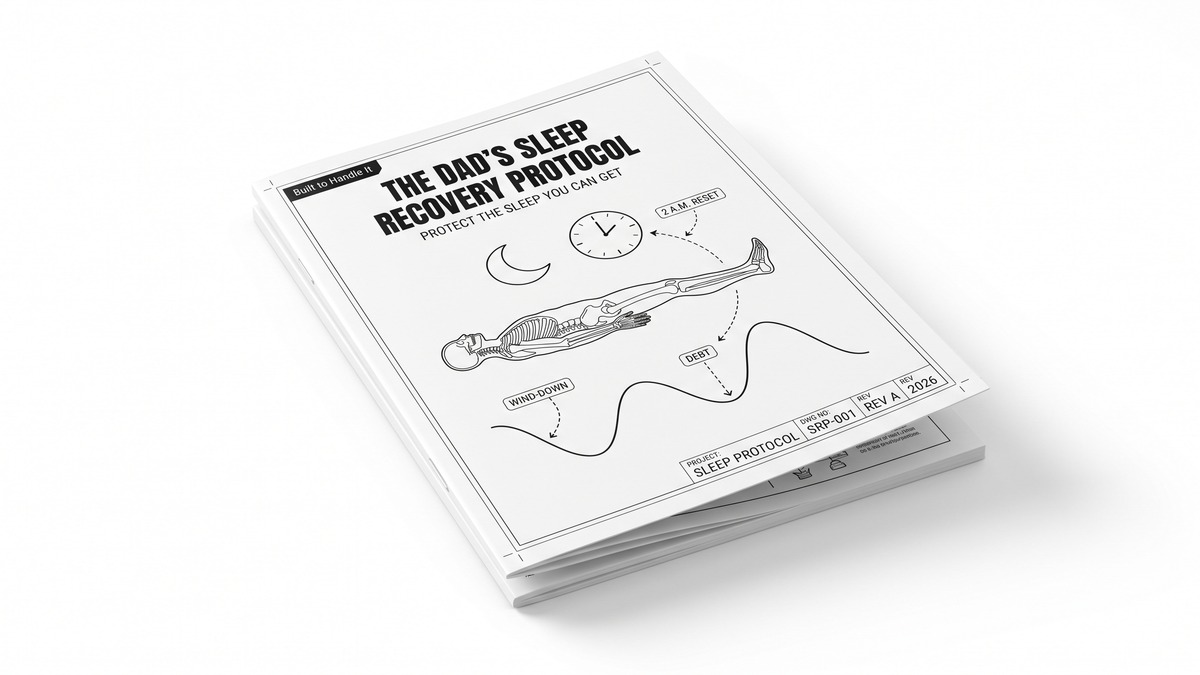
The Dad's Sleep Recovery Protocol
The 30-minute wind-down, the 2 a.m. racing-mind reset, and the 7-day reset — because bad sleep tanks your stress tolerance by a third.
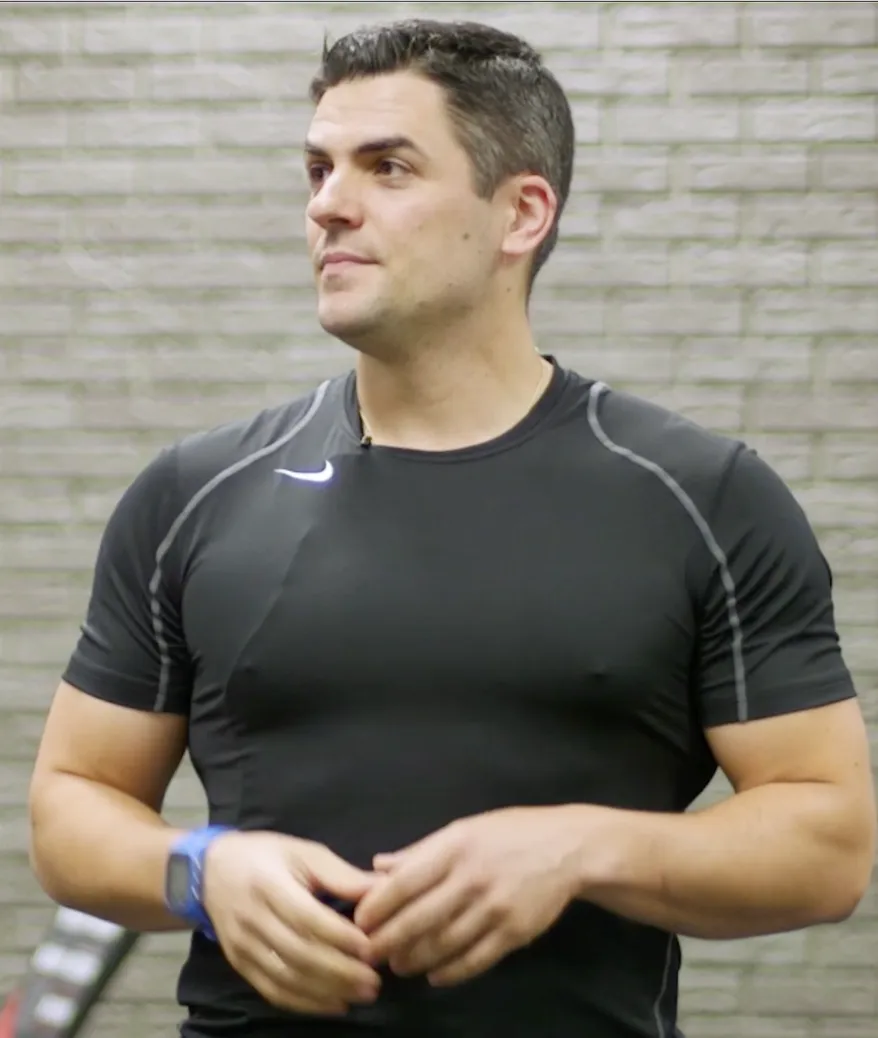
Meet Dr. Mike Roussell
The short version: I've built my career helping people perform when the stakes are highest. Then I became a dad of four — and learned the toughest arena isn't a boardroom or a starting lineup. It's 6 PM on a Tuesday, with an inbox that won't quit and kids who need you anyway.
- PhD in nutrition, Penn State (biochemistry, Hobart College)
- Author of 5 books — incl. The MetaShred Diet & Strength: The Field Manual
- Men's Health advisory board · 600+ articles · 200+ TV segments
- Has coached pro athletes, Olympic medalists, celebrities & Silicon Valley executives
"I built this because the standard advice — 'just breathe,' 'just relax' — doesn't work when you've got real responsibilities. Dads need a system, not a slogan."
Become unshakeable in 90 days — or I don't want a dime.
Join today, go through the first four modules, and put the system to work for a full 90 days. If you're not steadier at 6 PM, recovering faster from the bad days, and sleeping better — email me one word: "refund." I send back every penny, same day. No forms, no "let me check with my team," no guilt trip. And you keep all five bonuses for your trouble. I carry the risk, because I've seen exactly what this system does when a dad actually runs it. The only way to lose is to leave everything exactly as it is.
Before we talk price, look at what the alternatives cost.
Built to Handle It is $147 — less than one therapy session. Once. For life.
- The lowest price ever offered
- The full system + all 5 bonuses
- Founding-member status for life
The smart money got in first and locked the best deal there will ever be. That door's shut — this is your turn.
- All 8 video modules + workbooks
- Lifetime access & future updates
- All 5 fast-start bonuses
- 90-day “Solid Dad” guarantee
- The same 8 modules + bonuses
- $50 more than founding
- Only after the next launch
Identical program. $50 more, weeks from now. Why pay more just to wait?
Secure checkout · instant access · 90-day money-back guarantee
Not for you if…
- You want a magic pill that fixes stress while you change nothing.
- You want to be told it's not your fault and you needn't lift a finger.
- You're happy running on fumes by 8 PM.
Built for you if…
- You used to feel like an athlete and want that guy back.
- You're tired of stress running the show.
- You already know scattered tools aren't working.
- You're ready to build something that actually lasts.
How much time does this actually take?
Can I listen instead of watch?
Is this just meditation?
I'm already in decent shape. Is this still for me?
What if I fall behind?
What if it doesn't work for me?
Close your eyes for ten seconds and go eight weeks out. You wake up and your first thought isn't dread. You get through the morning chaos without feeling behind. The 4:47 PM email lands, you feel the spike… and you know exactly what to do with it. You finish the cycle instead of hauling it home.
You walk in the door. Your kids want to play.
And you have the energy to say yes.
You're actually there at dinner. When the kids go down, you don't collapse onto the couch reaching into the pantry. You feel like yourself again. Not because life got easier — because you got better at handling it.
This is how you become the dad who stays solid when everyone else is losing it.
You used to be an athlete.
That guy is still in there. Let's go find him.